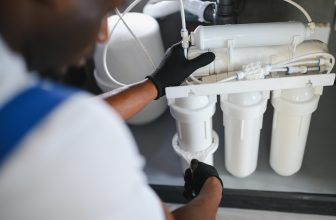
Reverse Osmosis (RO) stands out as one of the most effective methods available to homeowners for purifying drinking water, capable of removing a vast array of contaminants that simpler filters leave behind. However, once a homeowner decides on RO technology, a significant choice emerges: should they opt for a traditional system that stores purified water in a tank, or embrace a newer, tankless design that filters water on demand? This decision involves trade-offs in cost, space, performance, and convenience.
This article provides a comprehensive, comparison of tank-based and tankless reverse osmosis systems, specifically tailored for a non-technical audience. Its aim is to demystify the differences, clearly outline the advantages and disadvantages of each approach, and explore the practical implications related to installation, maintenance, efficiency, and cost. By understanding these nuances, homeowners can make an informed decision, selecting the RO system that best aligns with their household’s specific needs, lifestyle, budget, and available space. This analysis focuses exclusively on the tank versus tankless aspect of RO systems; a basic understanding of the reverse osmosis filtration process itself is assumed.
This article is part of our Complete Guide to Choosing a Home Reverse Osmosis System, a comprehensive resource designed to walk you through every step of the selection process. From understanding system types to evaluating features and matching a system to your household’s unique needs, our guide brings all the essential information together in one place. Click here to explore the full guide.
Understanding the Contenders: How They Work
The fundamental difference between these two types of RO systems lies in how they manage the purified water after it passes through the RO membrane. This core distinction drives nearly all other variations in design, performance, and suitability.
Tank-Based RO Systems: The Traditional Approach
Definition:
Tank-based RO systems, the long-standing standard in residential water purification, operate by filtering water relatively slowly and then storing this purified water in a dedicated, pressurized holding tank. This stored water is then ready for immediate dispensing when the user opens the dedicated RO faucet.
Mechanism:
The typical process involves several stages. Incoming tap water first passes through pre-filters (usually sediment and carbon filters) to remove larger particles like sand, silt, and chlorine, which could otherwise damage the delicate RO membrane. The water is then forced through the semi-permeable RO membrane, the core of the system, where the vast majority of dissolved solids and contaminants are rejected and flushed down the drain. The purified water (permeate) is directed to a storage tank.
This storage tank is not just a simple container; it’s a hydropneumatic pressure tank. Inside, a bladder separates a chamber of purified water from a chamber of pre-pressurized air. As purified water fills the tank, it compresses the air in the other chamber. When the RO faucet is opened, this compressed air pressure pushes the purified water out of the tank, through a final post-filter (typically carbon, for polishing taste and removing any residual odors) and out the faucet. Tank sizes vary, but common under-sink models typically hold around 2-4 gallons of usable water, though the physical tank itself is larger (e.g., 3.2 to 5 gallons) due to the space occupied by the air bladder.
A critical component is the Automatic Shut Off (ASO) valve. As the tank fills, the increasing water volume compresses the air bladder, creating back pressure against the RO membrane. When this back pressure reaches a certain level (often about two-thirds of the incoming line pressure), the ASO valve closes, stopping the flow of water into the system and preventing continuous wastewater generation. This mechanism conserves water by halting production when the tank is full.
Why the Tank?
The necessity of the storage tank stems from the inherently slow production rate of traditional RO membranes. These membranes are designed for thoroughness, filtering water almost drop by drop. Typical residential membranes might be rated at 50, 75, or 100 Gallons Per Day (GPD). While this sounds like a lot, it translates to a very slow flow rate per minute – a 50 GPD membrane produces only about 0.034 gallons per minute, or roughly one gallon per hour under ideal conditions. Without a storage tank, filling even a single glass of water directly from such a membrane would take an impractically long time. The tank acts as a buffer, accumulating purified water over time so that a usable volume is instantly available when needed.
The storage tank is therefore essential for making traditional RO systems practical for everyday use, providing immediate access to purified water despite the slow filtration process. However, the very mechanism that makes it work – the build-up of back pressure to signal the ASO valve – has an inherent drawback. Reverse osmosis membranes function most efficiently and produce water fastest when the pressure difference across the membrane (feed pressure minus permeate pressure) is high. As the tank fills and back pressure increases, this pressure differential decreases, causing the membrane to produce water more slowly and less efficiently (i.e., generating more wastewater relative to purified water). This means the system operates at its lowest efficiency precisely when it’s working to top off the tank after small uses, a common scenario in household settings. Thus, while the tank solves the user’s need for immediate water, its operational principle introduces an efficiency limitation.
Tankless RO Systems: On-Demand Filtration
Definition:
Tankless RO systems, also known as direct flow systems, represent a newer approach to reverse osmosis. These systems purify water directly from the cold water supply line only when the dedicated RO faucet is opened, delivering filtered water instantly without the need for a storage tank.
Mechanism:
The process flow in a tankless system typically involves water passing through pre-filters, then being pushed by an internal electric booster pump through a high-flow RO membrane, followed by a post-filter, and finally exiting through the faucet. The key difference is the integration of a booster pump and the use of RO membranes with much higher production ratings (GPD) compared to traditional systems. These high-capacity membranes, often rated at 400, 600, 800, or even up to 1600 GPD, are necessary to achieve a satisfactory flow rate for on-demand use.
The electric booster pump is usually essential. It generates the high, consistent water pressure required to force water through the high-flow membrane quickly enough to provide immediate purified water at the faucet. This consistent high pressure overcomes the slow nature of RO filtration that necessitates a tank in traditional systems.
Why No Tank?
Technological advancements, primarily the development of more efficient, high-flow RO membranes combined with integrated booster pumps, have made on-demand filtration practical for residential use. The system can produce purified water fast enough to meet typical household demands (like filling a glass or pot) in real-time, eliminating the need for a storage reservoir.
The internal booster pump is fundamental to the tankless concept. It doesn’t just enable faster flow; it also optimizes the performance of the RO membrane. By maintaining a consistently high pressure differential across the membrane (unlike the fluctuating pressure in tank systems caused by backpressure), the pump allows the membrane to operate closer to its peak efficiency. This typically results in significantly better water efficiency, meaning less wastewater is generated for each gallon of purified water produced. Therefore, the pump is the key enabler of both the space-saving design (by eliminating the tank) and the improved water efficiency often touted as major advantages of tankless systems. However, this reliance on a pump inherently means tankless systems require electricity to function, creating a direct trade-off: users gain space and water efficiency but become dependent on electrical power and incur slightly higher upfront and operational costs.
The Core Difference: Stored vs. Instant Purification
To summarize the fundamental operational distinction: tank-based systems filter water ahead of time, storing it under pressure for later use, while tankless systems filter water instantaneously the moment the faucet is turned on. This difference – storing versus producing on demand – is the root cause of most of the contrasting pros, cons, performance characteristics, and suitability factors explored in the following sections.
Evaluating the Options: Advantages and Disadvantages
Choosing between a tank-based and a tankless RO system involves weighing a distinct set of benefits and drawbacks for each type.
The Case for Tank-Based RO: Pros and Cons
Pros:
- Lower Initial Cost: Tank-based systems generally have a more accessible price point compared to their tankless counterparts, making them a budget-friendly entry into high-quality water purification.
- Emergency Water Supply: The storage tank holds a reserve of purified water (typically 2-4 gallons) that remains accessible even if the power goes out, provided the system doesn’t rely on an electric booster pump or UV light. This can be a valuable feature during emergencies or power disruptions.
- No Electricity Required (Typically): Standard tank systems operate passively using existing household water pressure. They do not require an electrical connection unless specific add-ons like a booster pump (for homes with low water pressure) or an ultraviolet (UV) sterilization stage (often recommended for well water) are included. This simplifies installation and eliminates ongoing electricity costs for the base system.
- Mature Technology: Having been on the market for decades, tank-based RO technology is well-understood, widely available, and supported by numerous manufacturers and service technicians.
Cons:
- Large Footprint: The primary drawback for many users is the significant amount of under-sink space required to accommodate both the filter assembly and the separate storage tank. This can be a major constraint in smaller kitchens or apartments.
- Potential for Stale/Off-Taste Water: If water sits unused in the tank for extended periods, it might develop a slightly “stale” or “off” taste compared to freshly filtered water. While the post-filter helps polish the taste, this remains a potential concern for some users.
- Risk of Secondary Contamination: Although tanks are lined with inert materials like butyl, there’s a theoretical possibility, especially with older or poorly maintained systems, for bacteria to grow within the tank over time. Regular sanitization can mitigate this risk but adds to maintenance requirements.
- Limited Supply: Water availability is restricted to the volume stored in the tank. Once depleted (e.g., by filling several large pots), the user must wait for the system to slowly refill the tank before full flow is restored.
- Higher Water Waste: Traditional tank systems are generally less water-efficient. They often produce 3, 4, or even more gallons of wastewater (brine) for every gallon of purified water. This inefficiency worsens as the tank fills and back pressure increases. Common waste ratios cited are 1:2 (pure:waste) or higher.
- Maintenance Complexity: Beyond regular filter changes, tank systems may require periodic checks of the tank’s air pressure and occasional draining and sanitization to maintain water quality and system integrity. Filter changes might also necessitate draining the system first.
The Case for Tankless RO: Pros and Cons
Pros:
- Space-Saving Design: Tankless units are significantly more compact, often integrated into a single housing, freeing up valuable under-sink storage space – sometimes saving 50-75% compared to tank systems.
- Continuous Fresh Water: By filtering water on demand, these systems provide water that is always freshly purified, eliminating concerns about taste changes from storage or potential tank contamination.
- Higher Water Efficiency: Due to the integrated pump maintaining optimal pressure, tankless systems typically boast much better pure-to-waste water ratios, often ranging from 1:1 up to 3:1. This conserves water, which is environmentally beneficial and can lead to lower water bills.
- Potentially Faster Flow Rate: High GPD ratings enable tankless systems to deliver purified water at a faster rate (once flowing) than the slow trickle produced directly by a traditional membrane, making tasks like filling pots quicker.
- Easier Filter Changes (Often): Many models are designed with user convenience in mind, featuring easily accessible, twist-and-lock filter cartridges that can be changed in seconds without tools. Some include indicators that alert the user when filters need replacement.
- Smart Features: The requirement for electricity allows for the integration of electronic features like real-time Total Dissolved Solids (TDS) monitoring, filter lifespan tracking displayed on the unit or a smart faucet, and sometimes even hot water dispensing options.
Cons:
- Higher Initial Cost: Tankless RO systems represent a significantly larger upfront investment compared to most traditional tank-based models.
- Requires Electricity: These systems need access to an electrical outlet under the sink to power the internal booster pump and any electronic features. This adds a dependency not present in basic tank systems and means the unit will not produce water during a power outage.
- No Emergency Water Storage: Because they filter on demand, tankless systems offer no reserve of purified water if the power or main water supply is interrupted.
- Potential for Slower Initial Output / TDS Creep: When the faucet is first opened after a period of non-use, there might be a brief delay before full flow is achieved as the pump engages. During these initial seconds, the water dispensed might have slightly higher TDS levels than fully purified water (“TDS creep”) because the membrane hasn’t reached optimal operating pressure instantly. Some systems employ flushing mechanisms to minimize this.
- Pump Noise: The internal pump required for operation will generate some level of noise while the system is filtering water. While often described as minimal or quiet, especially with the cabinet closed, it is an audible difference compared to passive tank systems.
- Filter Costs: While filter changes might be less frequent, the integrated, often proprietary multi-stage filter cartridges used in tankless systems can be considerably more expensive than the individual standard-sized filters used in many tank systems.
- Dependence on Water Pressure: Although the booster pump compensates for pressure variations to some extent, tankless systems still have minimum incoming water pressure requirements for proper operation. Very low household pressure might still pose challenges.
Key Decision Factors: A Head-to-Head Comparison
Understanding the core differences and pros/cons sets the stage for comparing tank and tankless systems across key practical factors that influence the user experience and overall suitability.
Water When You Need It: Output Speed and Availability
Tank Systems: The primary advantage here is the instant availability of water stored under pressure. When the faucet is opened, water flows immediately at a rate similar to a standard kitchen faucet, thanks to the tank’s air pressure. However, this supply is finite. Once the tank’s reserve (typically 2-4 gallons) is depleted, the flow rate drops dramatically to the membrane’s slow production speed (e.g., 50 GPD is about 0.034 Gallons Per Minute or ~1 gallon per hour). Refilling the tank takes considerable time. This makes tank systems excellent for quickly filling a glass or small pitcher but potentially frustrating for large volume needs like filling multiple large pots consecutively.
Tankless Systems: These systems produce water on demand, meaning the supply is continuous as long as the faucet is open. The flow rate is determined by the system’s GPD rating – higher GPD means faster flow. For example, a 400 GPD system might deliver around 0.28 GPM, a 600 GPD system around 0.4 GPM (filling a cup in seconds), and an 800 GPD system around 0.56 GPM. While significantly faster than the direct output of a traditional membrane, this on-demand flow might still be slightly lower than the initial burst from a fully pressurized tank system. Furthermore, there can be a slight delay of a second or two when the faucet is first opened as the pump starts and pressure builds. Tankless systems excel where continuous or large volumes of purified water are needed without the worry of depleting a tank.
Understanding GPD: It’s crucial to understand that GPD (Gallons Per Day) ratings reflect the maximum potential production capacity over a 24-hour period under ideal laboratory conditions (specific water pressure, temperature, and TDS levels). It does not represent the actual flow rate you’ll experience at the faucet. Converting GPD to Gallons Per Minute (GPM) or Liters per Minute (L/min) provides a more practical comparison of instantaneous flow. For tankless systems to provide acceptable on-demand flow, they require much higher GPD ratings (400+) compared to tank systems (50-100 GPD).
The perception of “faster” flow can be subjective. A tank system feels faster for the first glass because the water is instantly available at full pressure. A tankless system is faster for filling a large pasta pot because it maintains its production rate indefinitely, whereas the tank system would quickly empty and slow to a crawl. The potential for “TDS creep” in the first few seconds from a tankless system means the absolute initial water might be slightly less pure than the consistently post-filtered water from a tank system. Therefore, the “better” flow rate depends heavily on typical usage patterns: short, infrequent draws might favor the tank’s immediacy, while sustained or large-volume draws favor the tankless system’s endurance.
Space Savers vs. Space Takers: Installation Footprint and Requirements
Tank Systems: These are notoriously bulky. They require considerable under-sink real estate to accommodate both the multi-stage filter housing and a separate, sizeable storage tank (often around the size of a small propane tank). Installation can sometimes be more complex due to the number of components and connections involved.
Tankless Systems: Their compact design is a major selling point. Often integrated into a single, sleek unit, they can free up 50-75% of the under-sink space previously occupied by a tank system. Installation might be physically simpler due to fewer separate parts, but the critical requirement is the availability of an electrical outlet under or near the sink to power the unit.
The dramatic space savings offered by tankless systems directly address one of the most common complaints about traditional RO units. In modern living spaces, particularly apartments, condos, or homes with smaller kitchens, under-sink storage is often at a premium. For homeowners prioritizing cabinet space, the significantly smaller footprint of a tankless system presents a compelling practical advantage that can outweigh other considerations like higher initial cost or electricity dependence.
Keeping it Running: Maintenance, Filter Costs, and Effort
Tank Systems: Maintenance typically involves replacing pre-filters (sediment, carbon) and the post-filter (carbon) every 6 to 12 months, depending on water quality and usage. The RO membrane itself usually lasts much longer, typically 2 to 4 years. Additionally, periodic checks of the tank’s air pressure might be needed, and some recommend occasional tank draining and sanitization to prevent potential microbial growth. Filter costs per individual filter are generally lower than integrated tankless cartridges. However, the process might involve shutting off water, draining the system, and handling multiple separate filter housings.
Tankless Systems: These systems often utilize integrated, multi-stage cartridges that combine several filtration steps into one or two modules. These cartridges typically have longer lifespans (e.g., 12 to 24 months) but come at a significantly higher price per cartridge. The filter change process is often designed for simplicity, featuring twist-and-lock mechanisms that require no tools and can be completed quickly. There is no tank maintenance to worry about. Many models include convenient filter life indicators that signal when replacements are due, and some incorporate automatic flushing cycles to help prolong membrane life.
The maintenance comparison reveals a trade-off between frequency/effort and cost/simplicity. Tank systems generally require more frequent attention (for pre/post filters) and potentially more involved procedures (tank checks/sanitization), but the individual components are usually less expensive. Tankless systems offer less frequent, often much simpler filter changes and eliminate tank care entirely, but the replacement cartridges can be costly and potentially proprietary. Users valuing convenience and minimal hassle might prefer the tankless approach despite the higher filter costs. Budget-conscious individuals or those comfortable with more hands-on maintenance might opt for a tank system. A true long-term cost comparison should factor in both the price of replacement filters and their required replacement frequency for specific models.
Water Efficiency: Comparing Wastewater Production
Tank Systems: Historically, tank-based RO systems have been less efficient in terms of water use. Waste ratios of 1:3 or 1:4 (one gallon purified to three or four gallons wasted) are common, and older or less efficient units could waste even more, up to 1:10. This inefficiency is exacerbated by the increasing back pressure as the storage tank fills, which reduces the membrane’s performance. However, efficiency can be significantly improved by adding a permeate pump. These devices use the energy of the wastewater stream to help push purified water into the tank, maintaining a higher pressure differential across the membrane and reducing wastewater by as much as 75-80%. Not all tank systems are compatible with permeate pumps, however.
Tankless Systems: Generally designed for much higher water efficiency, tankless systems leverage their internal booster pumps to maintain optimal operating pressure across the membrane consistently. This leads to significantly better pure-to-waste water ratios, with manufacturers commonly advertising ratios of 1:1, 2:1, or even 3:1. Some advanced models employ wastewater recirculation techniques to further enhance efficiency. Systems meeting the EPA’s WaterSense label criteria must achieve high efficiency standards (e.g., a waste ratio no worse than 1:2.3).
While tankless systems generally offer superior water efficiency out of the box due to their pump-driven design, the gap can sometimes be narrowed. A traditional tank system equipped with an aftermarket permeate pump might achieve efficiency levels comparable to some tankless models, although this adds cost and complexity to the tank system. It’s important to note that the high efficiency of tankless systems is directly linked to their reliance on the electric pump. For consumers prioritizing water conservation, tankless systems usually represent the more efficient starting point. However, comparing the specific manufacturer specifications or looking for the WaterSense label on any model (tank or tankless) is crucial for making an informed choice based on water efficiency.
Powering Purification: Energy Consumption Differences
Tank Systems: The majority of standard tank-based RO systems are passive, operating solely on the existing water pressure in the home’s plumbing. They do not require electricity unless optional components are added, such as an electric booster pump (necessary for homes with very low water pressure, typically below 40 psi) or a UV sterilization lamp (often recommended as an extra precaution for water from private wells).
Tankless Systems: These systems actively require electricity to function. Power is needed for the internal booster pump that drives the on-demand filtration process, as well as for any electronic controls, sensors, displays, or smart features. While the energy consumption during operation is generally considered low compared to other household appliances, it represents an ongoing operational cost and introduces an electrical dependency not found in basic tank systems.
The reliance on electricity is a fundamental differentiator and potential vulnerability for tankless systems. While electricity enables the key benefits of compact size, high flow rate, and improved water efficiency, it also means the system is inoperable during power outages, leaving the household without access to purified water. It also adds a small but continuous operating expense to the electricity bill and introduces electronic components that could potentially fail over time. For users in areas prone to power disruptions, those seeking off-grid solutions, or those aiming for the lowest possible energy footprint, the passive nature of a basic tank system offers a distinct advantage.
Built to Last?: System Lifespan and Reliability Insights
Tank Systems: As a mature technology that has been widely used for decades, tank-based RO systems are generally considered robust and reliable. Manufacturers often suggest a lifespan of 10-15 years with proper maintenance. Potential long-term issues typically relate to the mechanical components, such as failure of the tank’s internal air bladder or, less commonly with modern lined tanks, corrosion.
Tankless Systems: Being a newer technology category, extensive long-term (10+ years) reliability data across a wide range of models and conditions is less established compared to tank systems. The inclusion of essential electronic components (control boards, sensors) and mechanical parts like the booster pump and potentially solenoid valves introduces additional potential points of failure that are not present in basic tank systems. While manufacturers typically offer warranties, the real-world longevity and common failure modes are still being understood relative to the simpler, time-tested design of tank systems. Some sources suggest tankless might last longer due to less water stagnation, but this appears more speculative than proven.
From a reliability perspective, tank systems represent a known quantity. Their failure modes and expected lifespan are well-documented. Tankless systems, while potentially very durable depending on build quality, inherently introduce more complexity. The electronic controls and electric pump are critical for operation and represent components that can wear out or malfunction over time. Consumers who are risk-averse or prioritize proven, long-term dependability might lean towards the established track record of tank-based systems. Those comfortable adopting newer technology and accepting the potential for more complex repairs might find the benefits of tankless systems outweigh these concerns.
The Bottom Line: Pricing and Long-Term Value
Initial Cost: There’s a clear difference here: tank-based systems are consistently less expensive to purchase initially. Tankless systems require a higher upfront investment, often costing significantly more.
Operating Costs: Tank systems have minimal or no direct electricity costs (unless equipped with a pump or UV light) but can lead to higher water bills due to their lower water efficiency. Tankless systems incur ongoing electricity costs for the pump and electronics but save on water costs due to their better efficiency.
Maintenance Costs: Tank system replacement filters (pre-filters, post-filter) are typically cheaper on an individual basis, but they usually need replacement more frequently (e.g., every 6-12 months). Tankless systems often use integrated cartridges that are replaced less often (e.g., 1-2 years) but are more expensive per replacement. Tankless systems eliminate the need for any tank-related maintenance.
Long-Term Value: Determining the better long-term value requires a personalized calculation. Tankless systems may offer savings over time through significantly reduced water consumption, potentially offsetting their higher initial price and electricity use. However, this depends heavily on local water and electricity rates, the household’s actual water consumption, and the cost and lifespan of replacement filters for the specific models being compared.
There is no universally “better value” option. The calculation is highly dependent on individual circumstances and priorities. High water costs make the efficiency of tankless systems more appealing. High electricity prices make tankless systems less economical. Frequent filter changes make the lower cost of individual tank system filters attractive. Users who highly value convenience might find the easier maintenance of tankless systems worth the extra filter cost. Those for whom under-sink space is critical will see value in the tankless design’s compactness. Conversely, the emergency water supply offered by a tank system holds significant value for others. Homeowners should attempt a rough calculation based on their local utility costs, estimated usage, filter replacement schedules and costs, and the initial purchase price to determine which system type offers better long-term value for them. The initially cheaper tank system may not remain the most economical choice over a 5- or 10-year period in all situations.
Finding Your Perfect Match: Suitability and Recommendations
With a clear understanding of the operational differences, pros, cons, and performance characteristics, homeowners can now consider which system type aligns best with their specific situation.
Factors to Consider
Household Size & Water Usage: Larger families or households with high daily water consumption (frequent cooking, filling large containers) may benefit from the continuous, non-depleting supply of a tankless system. Manufacturers often offer tankless models with varying GPD ratings tailored to different family sizes (e.g., 400 GPD for 1-3 people, 800 GPD for 3-6, etc.). Smaller households with lower or less frequent demand might find a standard tank system perfectly adequate and more cost-effective initially.
Water Pressure: This is a critical factor for any RO system. Standard tank systems generally require a minimum pressure of around 40 psi to operate effectively. While tankless systems have internal pumps, they still have minimum inlet pressure requirements specified by the manufacturer. Homes with low water pressure (often found with private wells, or sometimes in older municipal systems), typically below 40-50 psi, may require an additional booster pump for either system type to function optimally. Extremely low pressure (<30 psi) could make tankless systems less viable or necessitate a more robust setup. For homes on well water, regardless of pressure, additional pre-treatment like water softening (if water is hard), sediment filtration, and potentially iron/manganese removal is often necessary to protect the RO membrane. UV sterilization is also frequently recommended for well water to address potential microbial contamination.
Budget (Initial vs. Long-Term): As detailed previously, the choice often comes down to whether minimizing the upfront purchase price (favoring tank systems) or optimizing for potential long-term savings through water efficiency and potentially lower maintenance hassle (potentially favoring tankless systems) is the priority.
Under-Sink Space: This is often a deciding factor. If under-sink cabinet space is severely limited, the compact nature of tankless systems makes them the far more practical, if not the only viable, option.
Need for Emergency Water: If having a reserve of purified water available during power outages is a high priority, a basic tank-based system (one that doesn’t rely on an electric pump or UV light) is the only choice that fulfills this need.
Environmental Concerns: Homeowners prioritizing water conservation will likely favor high-efficiency tankless models, especially those bearing the EPA WaterSense label. Those prioritizing minimal energy consumption would lean towards a basic, non-pumped tank system.
Clearing the Air: Common Myths About Tank and Tankless Systems
Several misconceptions circulate regarding both types of RO systems. Addressing these can help clarify the decision-making process:
Myth 1: “Tank water is unsafe or always tastes stale.”
Reality: While water sitting for very long periods could potentially develop off-tastes, and secondary contamination is a theoretical risk in poorly maintained systems, modern tanks use inert liners and rely on regular water turnover in typical households. The final post-filter effectively polishes the water’s taste just before dispensing. The “freshness” advantage of tankless systems is real, but the risks associated with tank water are often overstated when proper maintenance is followed.
Myth 2: “Tankless systems provide instant high-pressure water just like a regular faucet.”
Reality: While the flow rate once running is high, there can be a brief delay (a second or two) upon opening the faucet as the pump activates and the system pressurizes. Additionally, the phenomenon of “TDS creep” means the very initial water dispensed might have slightly elevated TDS levels before stabilizing. The pressure is generated by the internal pump, not directly stored like in a tank system.
Myth 3: “All RO systems waste enormous amounts of water.”
Reality: This was truer of older, less efficient tank systems. Modern high-efficiency tankless systems have dramatically improved waste ratios (often 1:1 or better). Furthermore, tank systems equipped with permeate pumps can also achieve significantly better efficiency. It’s essential to check the specific efficiency rating (often expressed as a pure-to-waste ratio or recovery percentage) of the model being considered, rather than relying on outdated generalizations.
Myth 4: “Tankless filters are inherently better or remove more contaminants.”
Reality: The core purification technology in both systems is the reverse osmosis membrane. Reputable systems of both types typically use membranes certified to meet industry standards (like NSF/ANSI 58 for TDS reduction) for removing a specific list of contaminants. The effectiveness of filtration depends on the quality of the membrane and the accompanying pre- and post-filters, not fundamentally on the presence or absence of a tank. Tankless systems might package more filtration stages into their integrated cartridges, but the fundamental RO contaminant removal capability should be comparable for similarly certified systems.
Myth 5: “You don’t need to worry about incoming water pressure with tankless systems because they have a pump.”
Reality: While the internal pump boosts pressure for the membrane, the system still relies on adequate incoming water pressure and flow volume from the home’s plumbing to feed the pump correctly. Manufacturers specify minimum inlet pressure requirements. Very low incoming pressure might still hinder performance or require specific system configurations or even an additional pre-booster pump.
Tailored Recommendations
Based on common priorities and constraints, here are some general guidelines:
For Small Apartments/Condos (Where Space is King): Tankless systems are almost always the preferred choice due to their significantly smaller footprint, maximizing precious under-sink storage. Just ensure an electrical outlet is accessible.
For Large Families (High, Continuous Water Use): Tankless systems often make more sense because they provide an endless supply of filtered water on demand, avoiding the frustration of emptying a storage tank during peak usage times. Opt for a model with a GPD rating appropriate for the household size.
For Budget-Conscious Buyers (Prioritizing Low Upfront Cost): Tank-based systems offer substantial initial savings, making high-quality RO water more accessible financially. However, factor in potentially higher long-term water costs if usage is significant.
For Homes with Frequent Power Outages / Off-Grid Priority: A basic Tank-based system (without an electric booster pump or UV light) is the only configuration that guarantees access to stored purified water when the power is out.
For Homes with Low Water Pressure / Well Water: This scenario requires careful evaluation. Either system type might necessitate an additional booster pump to achieve adequate operating pressure. Tankless systems might be more sensitive to very low starting pressures. Regardless of the RO system choice, well water typically requires robust pre-treatment (sediment, potentially softening, iron/manganese removal) and possibly UV sterilization. Consulting with a qualified water treatment professional is highly recommended.
For the Environmentally Conscious (Water Conservation Focus): High-efficiency Tankless models, particularly those certified by EPA WaterSense or boasting impressive manufacturer-stated waste ratios (e.g., 1:1, 2:1, 3:1), are generally the superior choice for minimizing water waste. This water saving must be balanced against the system’s energy consumption.
For Users Prioritizing Simplicity and Low Maintenance Effort: Tankless systems often edge out tank systems due to typically easier, less frequent filter changes (often tool-free, twist-and-lock) and the complete elimination of tank maintenance. Be prepared, however, for the higher cost of replacement cartridges.
At-a-Glance: Tank vs. Tankless Summary Chart
To aid in final decision-making, this chart summarizes the key differences across critical factors:
| Feature | Tank-Based RO System | Tankless RO System | Key Considerations / Notes |
|---|---|---|---|
| Water Delivery | Instant flow from stored pressure | On-demand flow, continuous supply | Tank limited by capacity; Tankless may have slight initial delay |
| Typical Flow Rate (Faucet) | Standard faucet flow (until tank empty) | High (e.g., 0.4 – 1.0+ GPM) depending on GPD rating | Tank refill is very slow; Tankless maintains flow rate |
| Water Storage | Yes (typically 2-4 gallons usable) | No | Tank provides emergency supply (if no power needed) |
| Footprint | Large (Requires space for filters + tank) | Compact (Often integrated unit) | Tankless saves significant under-sink space |
| Initial Cost | Lower ($) | Higher ($$) | Tankless requires larger upfront investment |
| Electricity Required | No (unless pumped or UV added) | Yes (for pump and electronics) | Tankless unusable during power outages; Adds to operating cost |
| Water Efficiency (Waste) | Lower (e.g., 1:3+ pure:waste); Improves w/ pump | Higher (e.g., 1:1 to 3:1 pure:waste) | Tankless generally saves significant water; Check specific model ratings/WaterSense label |
| Maintenance Effort | More frequent pre/post filter changes; Tank care | Less frequent (integrated filters); No tank care | Tankless filters often easier to change (twist-lock) |
| Maintenance Cost | Lower cost per filter; Membrane ~2-4 yrs | Higher cost per integrated cartridge; Membrane incl. | Calculate long-term costs based on frequency and price |
| Water Freshness | Potential for stagnation if unused | Always fresh, filtered on demand | Tank post-filter polishes taste; Tankless avoids tank contamination risk |
| Reliability | Mature tech, proven lifespan (10-15 yrs) | Newer tech; Pump/electronics add failure points | Long-term tankless data less established |
| Best Suited For | Budget-focused; Need emergency water; Ample space | Space-saving needed; High water use; Water saving | Low pressure/well water requires careful assessment & likely pre-treatment for both types |
Final Thoughts: Making an Informed Choice
The decision between a tank-based and a tankless reverse osmosis system ultimately hinges on balancing competing priorities. There is no single “better” system, only the system that is better for a specific household’s needs and circumstances.
The core trade-offs revolve around:
- Space vs. Initial Cost: Tankless systems save significant space but cost more upfront.
- Water Efficiency vs. Electricity Dependence: Tankless systems save considerable water but require electricity and won’t work during outages.
- Stored Emergency Supply vs. Continuous On-Demand Flow: Tank systems offer a water reserve, while tankless systems offer an endless supply as long as power and water are available.
- Proven Technology vs. Newer Features & Convenience: Tank systems have a long track record, while tankless systems offer modern conveniences like easier filter changes and smart features, but rely on newer electronic and mechanical components.
Homeowners should carefully review the comparisons presented, consult the summary chart, and honestly assess which factors are most important for their situation. Consider household size, daily water usage patterns, available under-sink space, budget constraints (both initial and long-term, including filter, water, and potential electricity costs), the reliability of the local power grid, and existing water pressure. Checking specific product specifications, efficiency ratings (like the WaterSense label), and filter costs for models under consideration is crucial. For complex situations, particularly those involving well water or known water quality issues, consulting with a reputable local water treatment professional can provide invaluable personalized guidance. By weighing these factors thoughtfully, homeowners can confidently select the reverse osmosis system that will best provide clean, purified water for years to come.